

Machu Picchu may be the reason you come to Cusco, but I’d make room in the itinerary for coffee, too. I have a soft spot for Peruvian coffee: the smell of freshly ground beans, that first warm sip, and the excuse to sit a little longer when there’s still plenty to see. For me, a good café deserves a place in a trip alongside the markets, museums, and archaeological sites.
That’s what makes Cusco coffee shops such an appealing part of the city. Whether you’re looking for an espresso before heading out, a latte with something sweet, or a quiet table to plan tomorrow’s adventure, a coffee break can become a small highlight of the day. This list brings together 10 cafés to consider for your Cusco itinerary, with options for anyone who takes their coffee seriously.

10 Best Cafes in Cusco
My love for Peruvian coffee is one more reason to slow down in Cusco. These are the 10 best cafés in Cusco I recommend trying during your visit, whether you’re craving specialty coffee, fresh pastries, or breakfast before a day of sightseeing.
1. Three Monkeys Coffee
Three Monkeys Coffee is probably one of the most popular names you’ll come across when looking for a good cup of coffee in Cusco. It’s located at Pasaje Pampa de la Alianza 474, in the historic center, and ranked 26th on The World’s 100 Best Coffee Shops 2026 list. My recommendation is to try the specialty coffee without sugar to better appreciate its flavors before adding anything.
I also recommend asking what beans they have available and letting the barista guide you based on your preferences. Reviews from other travelers frequently mention the care taken in preparation and the opportunity to try coffees with different flavor profiles. For your budget, expect to spend approximately US$6–12 per person, depending on what you order. This is an estimated total spend, rather than the price of a single cup.
You might also want to check out: Top 10 Outdoor adventures in South America
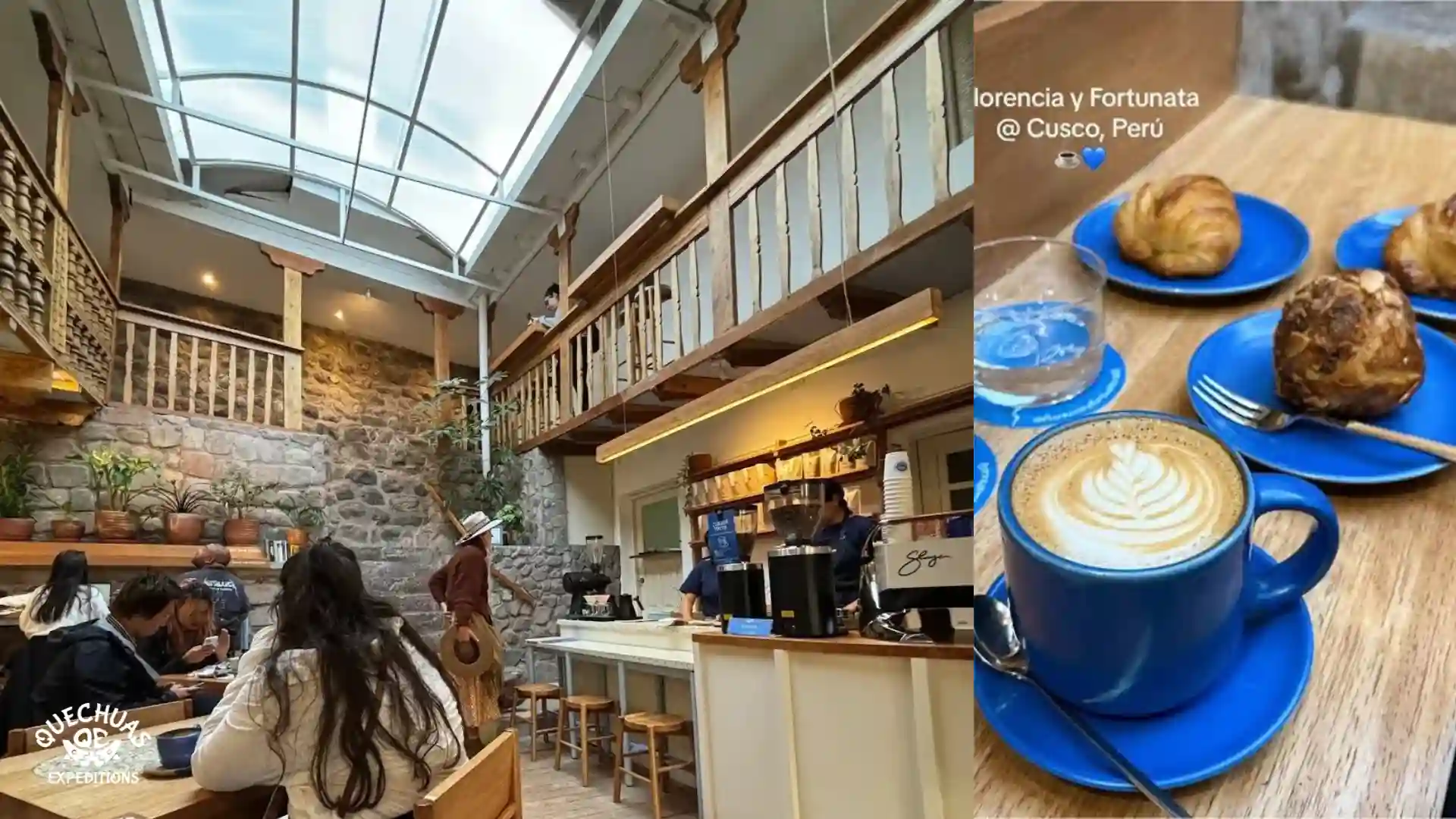
2. Florencia y Fortunata
What interests me most about Florencia y Fortunata is the story behind its coffee. Located at 332 Suecia Street, near the Plaza de Armas, this café proudly serves coffee produced, roasted, and prepared by women, highlighting their work throughout the coffee journey. I recommend asking about the woman who produced the coffee you’re drinking. Knowing her name and where the beans come from adds something special to your coffee break.
Florencia y Fortunata also ranked 100th on The World’s 100 Best Coffee Shops 2025 list. If you’re craving something sweet, consider the tiramisu alfajor, which was highlighted in an El Comercio food feature. It sounds like a lovely pairing for anyone who enjoys both coffee and pastries. For your budget, expect an approximate total spend of US$6–12 per person, depending on your order.
3. Black Llama Coffee
Black Llama Coffee is located at 172 Mesón de la Estrella, at the entrance to Black Llama Hostel, and you’re welcome to visit even if you aren’t staying there. I’d include it on this coffee route because its menu gives you a closer look at Peruvian coffee, identifying the producers, regions, and flavor profiles behind its microlots. If you’re curious about where your coffee comes from, it’s a good reason to strike up a conversation with the barista.
To start, I’d recommend a double espresso or a pour-over, depending on the beans available. If you feel like trying something different, the menu also includes espresso tonic and Chicha Latte. Based on the prices published on its website, a double espresso costs approximately US$2.30, an americano US$2.60, a flat white US$3.20, and a cappuccino or latte US$3.50. The espresso tonic and Chicha Latte are approximately US$4.65 each, giving you a useful idea of what to budget.
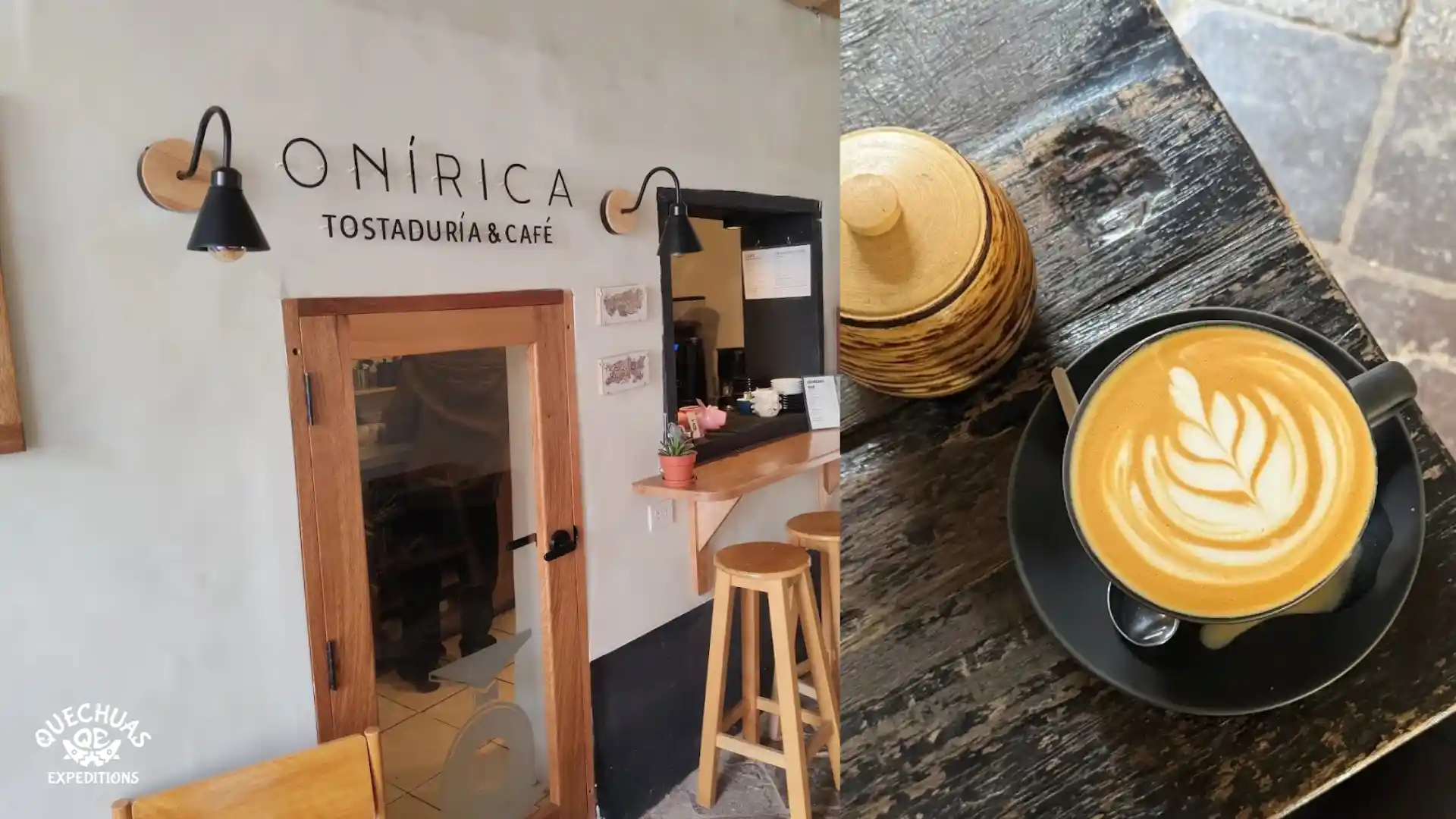
4. ONÍRICA Coffee Roastery & Brew Bar
If you’re interested in how brewing methods bring out different flavors in coffee, I’d make ONÍRICA one of your first stops. Located at 152 Choqechaka Street, it specializes in pour-over coffee. My advice is to tell the barista what flavors you usually enjoy and ask for guidance before choosing your beans or brewing method. You don’t need to know the difference between a V60 and a Chemex to enjoy the experience.
Other visitors often highlight the personal attention and helpful explanations they receive when choosing their coffee. I’d consider it a place to slow down and give your cup a little more attention. Reviews mention spending approximately US$3–6 per person, although I couldn’t find a current official menu to confirm individual prices. Use that as a rough guide, and ask how much your chosen coffee costs before ordering.
5. Café D’Wasi Peruvian Coffee
Café D’Wasi, at 135 Heladeros Street, is another stop I’d include if you want to try different ways of brewing Peruvian coffee while staying close to Plaza Regocijo. Alongside familiar drinks like lattes, you’ll find brewing methods such as Chemex and AeroPress. I’d take the opportunity to order something different from my usual coffee and ask what to expect from the preparation.
Travel writer Heather Jasper, who describes visiting its locations many times, highlights the range of brewing methods and the owner’s connection to his parents’ coffee farm. She also mentions growers from Santa Teresa, giving you a closer connection to the region you’re visiting. For your budget, reviews report an approximate total spend of US$6–12 per person, depending on your drink and any food you order.
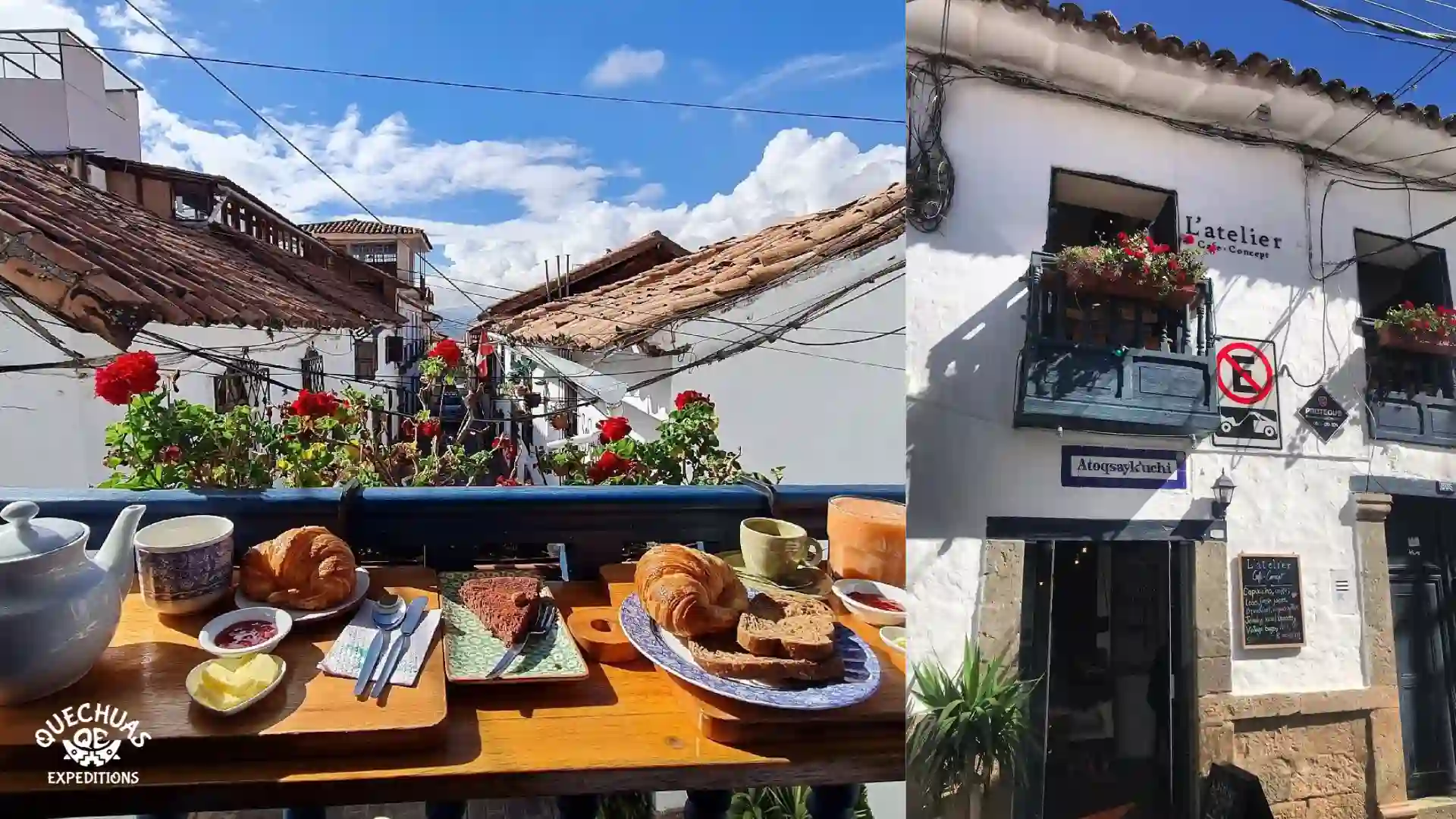
6. L’Atelier Café Concept
L’Atelier Café Concept is the kind of place I’d choose when I want to enjoy the setting as much as the coffee. Located at 605 A Atoqsayk’uchi Street in San Blas, it combines a boutique selling handcrafted goods with a small café. The window tables overlooking the neighborhood’s narrow streets are a big part of its charm. If you have your heart set on one, give yourself some extra time and check what’s available when you arrive.
Travelers often mention the intimate setting and lovely views, although opinions on the drinks and desserts vary. I’d include it as a pleasant break during a walk around San Blas: order a coffee, see which pastries are available that day, and browse the shop before leaving. Allow approximately US$6–12 per person, depending on your order.
7. Café Ayllu
Alongside Cusco’s specialty coffee spots, I’d make room for a traditional café like Ayllu. Its Almagro Street location in the historic center is listed as number 133 on Tripadvisor and 137 in another directory, so my practical advice is to search for the café by name on your map. Once there, I’d pair a drink with something local, such as pan con nata, bread served with thick milk cream, or the pastry known as lengua de suegra.
Hot chocolate, milk punches, and bread come up frequently in visitors’ reviews. Some even describe returning to Ayllu as a tradition whenever they’re back in Cusco. I’d consider it for breakfast or lonche, an afternoon or early evening snack with a warm drink, especially if you feel like trying something beyond pancakes and avocado toast. Budget approximately US$6–12 per person.

8. Cappuccino Cusco Café
For a coffee break overlooking the Plaza de Armas, Cappuccino Cusco Café is worth considering. You’ll find it at 141 Portal de Comercio, with balconies facing the square. My first suggestion would be to ask whether a table with a view is available. Watching the activity below is a good reason to linger over your drink.
Traveler feedback is mixed: some visitors love the location, while others report uneven service or coffee preparation. I’d choose it mainly for the setting and keep that in mind when planning a visit. The published spending range works out to approximately US$6–12 per person, depending on whether you order a drink alone or add something to eat.
9. Jack’s Café
Jack’s Café would be on my list for a morning when coffee alone won’t do. It’s now at 493 Ruinas Street, having moved there in August 2023, a useful detail if you’re following an older travel guide. The menu includes all-day breakfasts, pancakes, and sandwiches, and the café emphasizes its generous portions. I’d check the size of the dishes before ordering extra sides; you may need less than you think.
There are also teas, hot chocolate, and other drinks for anyone in your group who doesn’t drink coffee. That makes it a practical breakfast stop when everyone wants something different before continuing around the historic center. Reported spending is approximately US$6–12 per person, although a larger meal can cost more. Treat that as a budget guide rather than a fixed breakfast price.
10. La Valeriana
I’d include La Valeriana for anyone who enjoys choosing a pastry just as much as choosing a coffee. One of its locations is at 576 El Sol Avenue, opposite Qoricancha, making it a convenient stop during a visit to the area. My advice is to look at the pastry display before ordering your drink. Visitors mention cakes, muffins, and savory options such as quiche, so you might find yourself changing your mind once you see what’s available.
Allow approximately US$6–12 per person at this location. For an additional price reference, the delivery menu for its 263 Clorinda Matto de Turner Street branch lists an americano at around US$2.60, a cappuccino or latte at US$3.50, and hot chocolate at US$4.10. Those prices belong to that branch’s delivery menu, so check the menu at the location you visit before ordering.

Which Cusco coffee shops should you choose?
I’d choose your café based on what you want from that particular stop: a closer look at Peruvian coffee, a window seat with a view, or a breakfast that keeps you going through the morning. You don’t need to visit all ten to enjoy Cusco’s café scene. Pick a few that fit your interests and leave yourself enough time to enjoy them.
For specialty coffee and different brewing methods
Three Monkeys would be my choice for its attention to the journey from farm to cup, with an emphasis on traceability, careful preparation, and creative drinks. ONÍRICA is especially appealing if you want to focus on filtered coffee: visitors describe choosing beans and methods such as V60 or Chemex with guidance from the barista. D’Wasi combines a connection to coffee grown in the Cusco region with several preparation options, including Chemex and AeroPress. I’d ask what beans are available that day, then choose a method with the barista’s help rather than ordering the same drink at every stop.
For views and a leisurely coffee break
I’d choose L’Atelier for a small, intimate pause in San Blas, especially if one of its upstairs window seats is available. The boutique downstairs adds another reason to linger before or after your drink. Cappuccino offers a different setting: second-floor seating overlooking the Plaza de Armas, where the square becomes part of the experience. My advice for either place is to ask about a table with a view before ordering; if that’s what brought you there, it’s worth checking first.
For breakfast, pastries, and something sweet
Jack’s is the option I’d keep in mind for a substantial breakfast, with pancakes, eggs, toasted sandwiches, and generous portions. La Valeriana is a good choice when you want to build your break around something sweet, although its menu also includes savory options such as quiche. For something more closely tied to Cusco’s café traditions, I’d choose Café Ayllu and ask for pan con nata or a lengua de suegra pastry. These three stops serve different cravings, so I’d let your appetite make the decision.

What to know before visiting Cusco coffee shops
A little conversation before ordering can make your café visit much more enjoyable. I’d check what coffee is available, look at the current menu, and ask about anything you need from the space, especially if you’re planning to stay with your laptop.
Ask about the beans before ordering
You don’t need a coffee vocabulary to ask useful questions. Start with, “Where was this coffee grown?” or “Which beans do you have today?” Then describe what you usually enjoy: chocolatey flavors, something fruity, or a lighter cup. I’d also ask which preparation the barista recommends for those beans. If you want to try a little Spanish, “¿Qué café me recomiendas?” means “Which coffee would you recommend?” It’s an easy way to start the conversation.
Check prices in soles before paying
The dollar amounts in this article are approximate conversions for planning your budget. Always check the menu price in Peruvian soles, since exchange rates and menu prices can change. Also, pay attention to what each estimate covers: a budget of roughly $6–$12 per person may include a drink and food, rather than the price of one coffee. I’d confirm the cost of any special beans, larger servings, or extras before ordering.
Check laptop policies before settling in
If you’re hoping to catch up on work, ask whether laptop use is welcome and whether there are any time limits or restrictions during busy hours. Before unpacking, check that you can connect to the Wi-Fi and that an outlet is available if you need one. I’d choose a table after checking those details, a lovely café for reading or chatting may have a different setup from what you need for an afternoon of work.
Frequently asked questions
Here are a few things I’d keep in mind when choosing a café, ordering a drink, or buying Peruvian coffee to take home.
What kind of coffee can I try in Cusco?
Peru grows Arabica varieties such as Typica, Bourbon, and Caturra, including in Cusco’s La Convención province. In the city’s cafés, you can try espresso-based drinks or filtered preparations such as V60, Chemex, and AeroPress.
How much does coffee cost in Cusco?
At Black Llama, published prices range from about $2.30 for a double espresso to $3.50 for a latte. Dollar amounts are approximate; the $6–$12 per-person estimates elsewhere in this guide may include food.
Which Cusco cafés have received international recognition?
Three Monkeys ranked 26th in The World’s 100 Best Coffee Shops 2026, while Florencia y Fortunata placed 100th in 2025. Both are worth considering if specialty coffee is your priority.
Can I buy Peruvian coffee beans to take home?
Yes, D’Wasi and Florencia y Fortunata sell packaged Peruvian coffee. I’d ask whether the beans you enjoyed are available and request a grind that suits your coffee maker at home.
Are there options for people who don’t drink coffee?
Yes. Jack’s offers tea, hot chocolate, and fruit drinks, while Café Ayllu serves hot chocolate and traditional milk-based ponches; I’d pair either with something from the food menu.