

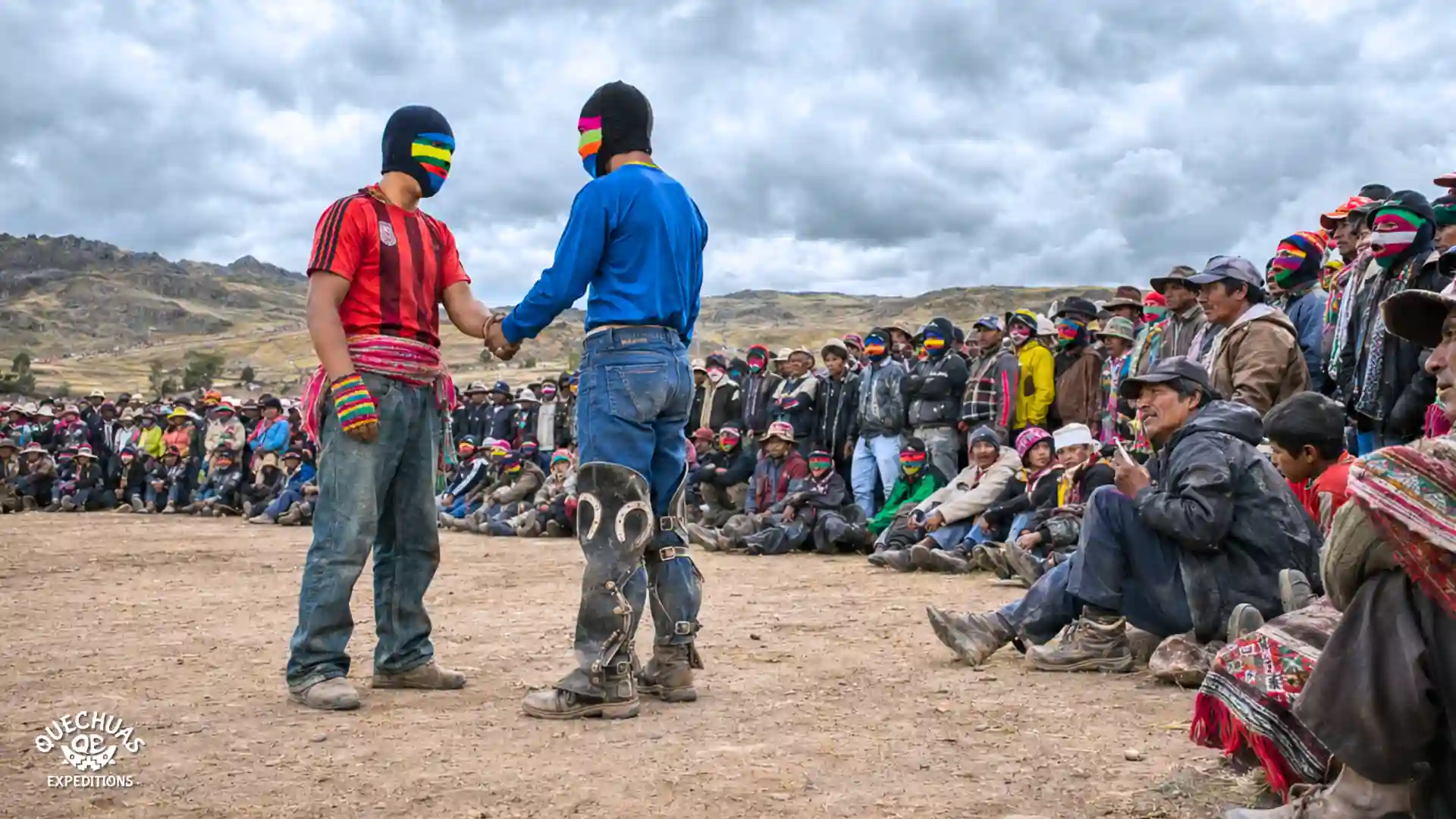
Takanakuy is a Christmas tradition in the Peruvian Andes. Its name comes from Quechua and means “to strike one another.” One of the best-known celebrations takes place every December 25 in Santo Tomás, the capital of Chumbivilcas Province in Peru’s Cusco region. Community members face off in supervised, one-on-one bouts. Some take part to settle personal disputes, while others do it to show their courage.
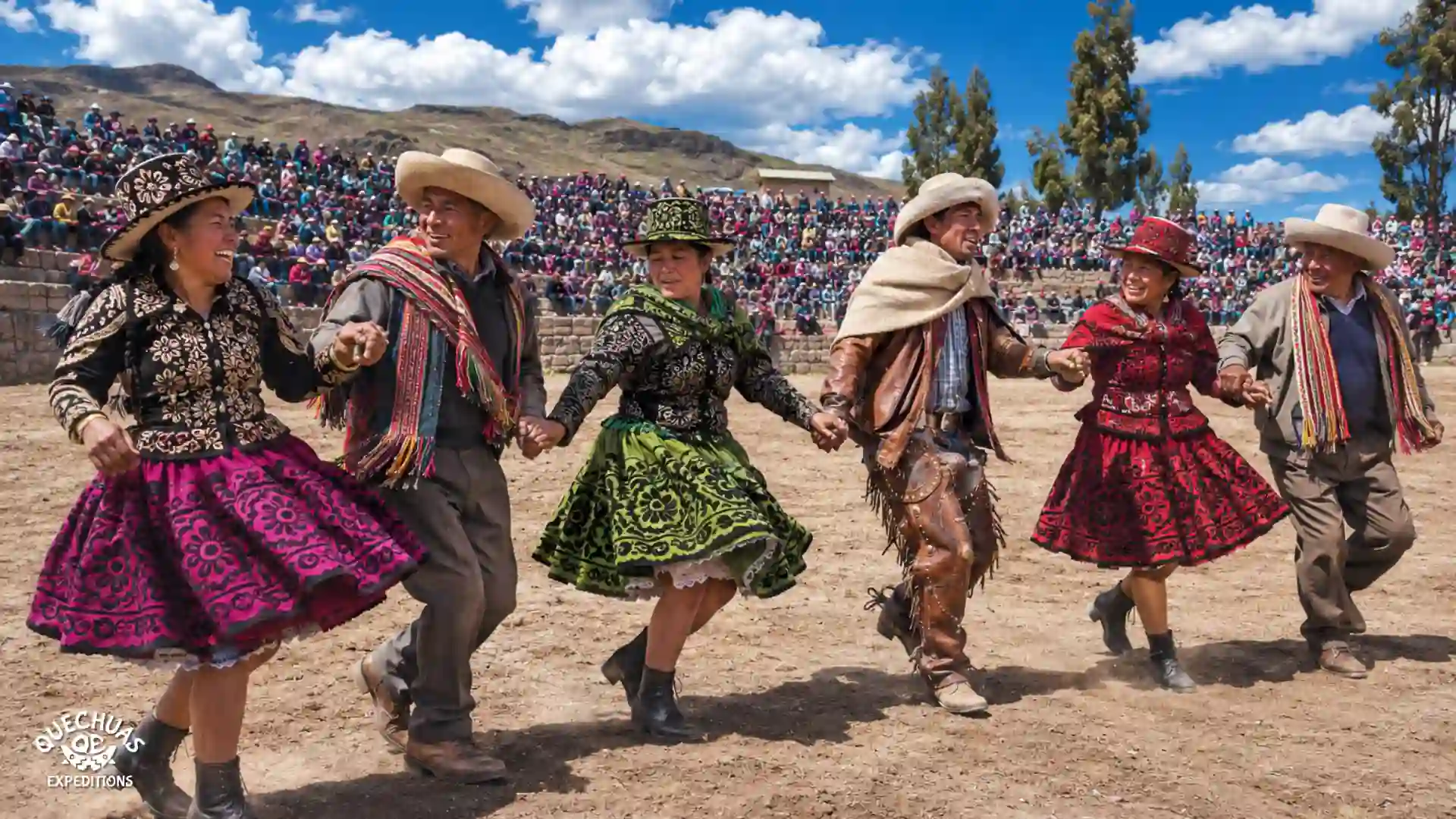
The bouts are part of a three-day celebration honoring the Christ Child, held from December 24 to 26, with processions, singing, and dancing to huaylía. In 2016, Peru’s Ministry of Culture recognized the music and dance of Chumbivilcas’s huaylía as National Cultural Heritage.
What is Takanakuy?
This Christmas tradition from the Peruvian Andes lets community members settle personal disputes through short, supervised, one-on-one fist fights. It is held every December 25, with Santo Tomás, the capital of Chumbivilcas Province in the Cusco region, as its best-known setting. Far from a random brawl, the ritual has its own rules, music, costumes, and community authorities. The goal is to clear the air with neighbors, family members, or coworkers and enter the new year without grudges.
Meaning of the name
The name comes from Quechua and is usually translated as “to strike one another” or “to hit each other.” It is built from takay, which means “to hit,” and the reciprocal ending -nakuy, which expresses an action carried out between people. The word itself points to mutual exchange: both sides take part, and both walk away on equal terms.
That is why the literal translation can be misleading. In practice, the blows are not meant to hurt or to defeat anyone. Each bout begins and ends with a hug, nobody is declared the winner, and the people who fought are expected to leave their quarrel behind. For the community, this fighting festival is a way to talk through conflict in the open and restore peace, not to create new rivalries.
Origins and cultural meaning
The custom comes from the highlands of Chumbivilcas and is rooted in Andean ideas of community justice and reciprocity. Its exact origins are debated, and some researchers connect it to older forms of ritual combat in the Andes. What is clear is its purpose today: to settle the year’s disputes in public so people can start the new year in peace.
The celebration also blends Andean and Christian traditions. It takes place during the three-day festivities in honor of the Christ Child (December 24 to 26), alongside processions, singing, and dancing to huaylía. Because the bouts happen in front of the whole community and under the watch of the ronderos, the conflict is resolved with witnesses, and the matter is considered closed once the fighters embrace.
You might also want to check out: 7 Day Peru itinerary
When is Takanakuy?
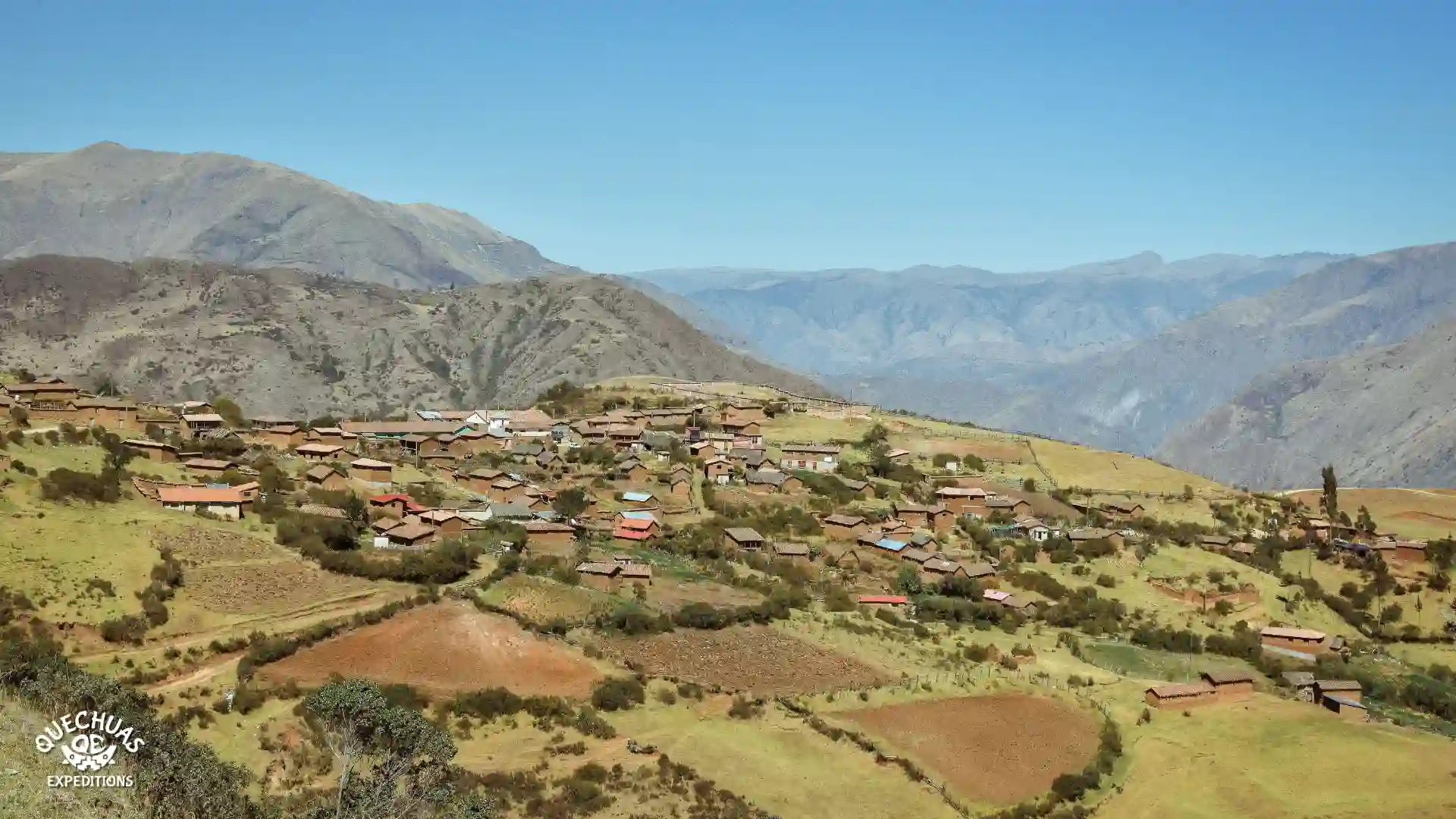
Takanakuy takes place on December 25, Christmas Day, in Santo Tomás, the capital of Chumbivilcas Province in Peru’s Cusco region. The town’s Christmas festivities run from December 24 to 26, with groups of singers, dancers, and musicians performing huaylía in the streets. December 25 is the day to be in Santo Tomás if you want to watch the traditional bouts.
Visiting Takanakuy as a tourist
Watching this Christmas fighting festival is possible, but it takes more planning than most trips in the Cusco region. Santo Tomás is remote, lodging is limited, and the event is a community ritual rather than a tourist attraction. This section covers what visitors need to know before going: who can attend, when to arrive, how to get there, where to stay, and how to behave respectfully.
Can tourists attend?
Yes, visitors can watch. The fights are held in the open, usually in the town’s bullring or main square, in front of large crowds, so spectators are part of the scene. Even so, this is a community ritual, not a show staged for travelers. Santo Tomás is a small Andean town, and many of the people who gather there are locals settling real disputes with neighbors, relatives, or business partners. Go as a respectful guest, not as a participant.
When to arrive
The main bouts take place on December 25, after the morning church service and into the afternoon. The wider festivities run from December 24 to 26, with music, dancing, and processions, so arriving on the 23rd or 24th gives you more time to settle in and see the build-up.
You might also want to check out: Cusco train stations travel guide
How to get to Santo Tomás
Santo Tomás, the capital of Chumbivilcas Province, lies in the southern highlands of the Cusco region, roughly 210 to 240 km from Cusco city depending on the source. There is no quick or tourist-style route: the journey is by road, over winding mountain highways, and it commonly takes between 7 and 10 hours in decent conditions. Older reports mention up to 12 hours. Plan for a full day of travel each way, and leave plenty of margin for delays.
Route overview
Most travelers start in Cusco and head south through the province of Canchis, where Sicuani, about two hours from Cusco, is the main regional hub. Regional bus services connect Santo Tomás with Sicuani and Espinar, so those towns are useful transfer points if you are coming from Arequipa, Puno, or the southern highlands. Whichever way you travel, check the exact route with your operator, because connections and road works can change.
By bus
Long-distance and regional buses leave from the Terminal Terrestre in Cusco (Av. Vía de Evitamiento 429). A few things to keep in mind:
Check which company serves Santo Tomás. Regional operators such as Transportes Ramos list routes linking Cusco, Sicuani, Santo Tomás, and Espinar. Confirm current schedules and prices directly with the company.
Buy your ticket in person or by phone. Local carriers often do not sell tickets online, and options can be limited.
Book your return trip early. Buses leave less often than on tourist routes, and many travelers leave on December 26 or 27.
Allow for delays. Rain, landslides, and roadworks can add hours.
By Private Vehicle or Tour
A hired car with a driver, or a trip organized by a local operator, gives you control over departure times and stops, and it is the most comfortable way to handle the distance. If you drive yourself, go only if you are used to mountain roads, start early in the day, and avoid night driving. A vehicle with good ground clearance is advisable.
Avoid this common mix-up
Searching for “Santo Tomás” in some map and transit apps may return a neighborhood stop inside Cusco city rather than the provincial capital. Always search for Santo Tomás, Chumbivilcas to avoid planning the wrong route.
Where to stay
Lodging in Santo Tomás is limited, and it fills up quickly during the festival. Many visitors stay in nearby towns or base themselves in Cusco and make the long journey from there. If you plan to sleep in town, reserve as early as you can and keep a backup option.
What to expect at the altitude
Santo Tomás sits at around 3,500 to 3,600 meters above sea level, a little higher than Cusco city. Spend a few days in Cusco or the Sacred Valley first so your body can adapt. Days can be sunny, but nights and early mornings are cold, so pack warm layers, a rain jacket, sun protection, and sturdy shoes.
Tips for respectful visitors
A few simple habits make a big difference for both your experience and the people around you:
- Book transport and lodging months ahead. Options are few and demand peaks on December 24 to 26.
- Ask before photographing. Fighters, families, in traditional dress deserve permission first. Never push into the circle for a better shot.
- Stay behind the circle and follow the instructions of the ronderos, who keep order.
- Go with a local guide or trusted operator. They can explain what is happening and help with logistics.
- Carry cash. Small towns in the highlands often have few ATMs and limited card payments.
- Don’t treat it as entertainment. Avoid laughing at fighters or filming for shock value. For participants, the bouts settle serious matters.
- Take care of your own safety. Medical services are far away, so bring any medication you need and travel insurance.
Warmi takanakuy
Warmi means “woman” in Quechua, and the name refers to the version of the ritual in which women face one another. Women’s bouts follow the same spirit as the men’s: a one-on-one match watched by the community, a hug at the start and at the end, and the aim of leaving old quarrels behind. In Santo Tomás, men and women may both take part, while some areas organize women-only fights. Because women’s participation is relatively recent, it can still stir debate, and attitudes vary from one community to another.
Women’s voices and dress
Women also shape the festival beyond the ring. They sing the huaylía songs that accompany the fights, helping set the rhythm and mood of the day. Many wear embroidered skirts, often paired with sturdy boots, which suit both the festive look and the cold, uneven ground of the highlands. If you attend, ask permission before photographing women, whether they are fighting, singing, or watching from the crowd.
Frequently asked questions
Here are the questions people ask most about the Peru fighting festival, from the rules to who can take part. Short answers, no guesswork.
What is Takanakuy fighting?
It is a Christmas Day tradition in Chumbivilcas, in the Cusco region, where community members settle grievances through short, one-on-one fist fights. The name comes from Quechua and means “to hit each other.” The goal is to clear old conflicts and start the new year without grudges.
What are the rules of Takanakuy?
The rules are few but firm. Fighters cannot kick or hit an opponent who is on the ground, and biting is not allowed. Fights usually last a minute or less, and referees called ronderos step in with whips if things get out of hand. Both fighters start and end with a hug, and nobody is declared the winner.
When and where does it take place?
Every December 25 in the province of Chumbivilcas, with Santo Tomás as the main town. Similar celebrations are held in other parts of Cusco, Apurímac, Huancavelica and Arequipa, and by Chumbivilcas migrants in Lima.
Can women take part?
Yes, but it depends on the community. Fighters were traditionally men, and women have only started fighting in recent years, which not everyone welcomes. In Santo Tomás, men and women may both take part, while other towns set their own rules. Some areas hold a women-only version called Warmi Takanakuy. Women also sing the huaylia songs that accompany the fights, and many wear embroidered skirts with sturdy boots.
Is it a real tradition or just a brawl?
It is a real Andean tradition with its own music, dances and customs. Costumes and masks are part of the day, and the ronderos keep order. The point is to resolve conflicts and restore peace between neighbors.
Can tourists attend?
Visitors can watch, and some reports mention that foreigners are welcome to join. Chumbivilcas is remote, so book transport and lodging well ahead and ask permission before photographing fighters. Going with a local guide or a trusted operator helps.
What is the biggest festival in Peru?
It depends on how you measure it. The Virgen de la Candelaria festival in Puno is often described as the largest folkloric celebration, and Inti Raymi in Cusco draws the biggest international crowds. The fighting festival is much smaller, but it is one of the most striking Andean traditions.
What is the most famous festival in Peru?
Inti Raymi, the Inca festival of the sun held every June 24 in Cusco, is the best known internationally. The Peru fighting festival stands out for how unusual it is.