

Today I want to tell you about the most important Lima tradition of the month. On August 30th, thousands of devotees gather in the streets to celebrate the Feast of Saint Rose of Lima, a tradition that transcends borders and honors the first saint of the Americas. Isabel Flores de Oliva, known worldwide as Saint Rose, was not only an extraordinary woman of her time, but also a living symbol of faith, sacrifice, and unconditional love for those most in need.
The story transports us to 16th-century colonial Lima, where a young woman decided to dedicate her life completely to God, facing family misunderstandings and social challenges. Have you ever wondered how she managed to become the patron saint not only of Peru, but of all of Latin America and the Philippines? In this article, we’ll discover together the most fascinating aspects of her life and the traditions that are kept alive year after year during her feast day.
Who was Saint Rose of Lima?
Born April 20, 1586 in Lima, Peru, Isabel Flores de Oliva is more commonly referred to by her religious name: Saint Rose of Lima and she was the first Catholic saint of the Americas. An account of her devotion, mystic status and service to the most needy still places her amongst the most venerated figures in Latin American Catholicism. Her deep spirituality and charitable works made her a renown figure of faith during colonial times, having been canonized by Pope Clement X in 1671.
You might also want to check out: The Twelve Angled Stone

When is the feast of Saint Rose of Lima?
Saint Rose of Lima’s feast day is on August 30, the same as the Traditional Liturgical Calendar. The date is official since the Catholic Church and not just different from her real death date that was seen on 24 August 1617. The Church chose August 30th to avoid conflicts with other liturgical celebrations and to provide a more suitable date for the universal celebration of Peru’s patron saint.
St Rose of Lima patron saint of Peru and the Americas
She was born in Lima in 1586 and is one of the most important religious figures that Catholicism has produced in Latin America. Although considered the patron saint of Peru, Saint Rose transcends the borders of her country, becoming the patron saint of the country and the Philippines.
But it is not only in these titles that Rosa is proclaimed “protector.” Saint Rose is the patron saint of the Peruvian National Police and of the sick in Peru due to her status as a “servant woman.” Her religious feast day, August 30, is not only an ecclesiastical event, but a reminder that Saint Rose is an icon of faith and spirituality, but also of rebellion and the influences of Lima.
You might also want to check out: 10 Beautiful places in Peru: Discover the natural wonders

Saint Rose of Lima Catholic Church
The Saint Rose of Lima Catholic Church is one of Lima’s most important religious centers during the celebration of its patron saint. The church is dedicated to Saint Rose, who is considered the patron saint of Peru, the Americas, and the Philippines. Since the church is located in the Plaza de Santa Rosa, not far from Lima Cathedral in the historic city center, thousands of believers flock to the site from all over the city.
During a Lima tours, this church is usually an essential stop. Travelers can learn more about the life of Saint Rose, admire sacred relics, and walk through the convent where she once lived, experiencing firsthand the devotion that still keeps her figure alive in the hearts of Lima’s people.
Visiting hours and recommendations
The Shrine of Saint Rose opens its doors daily from 8:00 AM. Mass and religious activity times may vary, so it is advisable to check in advance if you plan to participate in specific celebrations. On ordinary days, the shrine receives a steady stream of visitors, but on weekends, and especially on the 30th of each month (in honor of her feast day), attendance increases considerably.
How to get to the Sanctuary of Saint Rose of Lima
The Sanctuary of Saint Rose of Lima is located at 100 Tacna Avenue, Cercado de Lima, in the historic heart of the Peruvian capital. This iconic temple is strategically located near the Rímac River, a few blocks from Lima’s historic center and very close to the famous Santa Rosa Bridge that bears its name.
Metropolitan
The Metropolitan is the most recommended option to reach the sanctuary due to its efficiency and coverage. You should take any Metropolitan bus headed toward downtown Lima and get off at Tacna Station, one of the most important stations in the system. From Tacna Station, the sanctuary is just an 8-minute walk east along Tacna Avenue.
Tacna Station is also an important transfer hub, so if you’re coming from the north of Lima (Los Olivos, Independencia, San Martín de Porres), you can take the Metropolitano to Central Station and then transfer to Tacna Station.
Blue and complementary corridors
The Blue Corridors offer multiple options for reaching the sanctuary area. The most convenient lines are:
- Lines 301 and 302: These routes take you directly to the Callao bus stop, located very close to the sanctuary. From this stop, you only need to walk approximately 5 minutes to reach Tacna Avenue.
- Lines 1237, 1243, 305, and 8102: These lines also have stops near the sanctuary and are useful for visitors coming from different districts of East and North Lima.
What to do when visiting the Church of Saint Rose of Lima
- Pay a visit to Saint Rose’s tomb: Inside the church, you can pay your respects at the tomb of Saint Rose, which is located in a small chapel. It’s beautifully adorned with fresh flowers and religious symbols.
- Check out the Saint Rose of Lima Museum: Just next door, in the convent, there’s a museum where you can explore artifacts that tell the story of her life and the miracles she is known for. It’s a great place to dive deeper into her legacy and the special bond she had with Lima.
- Join the Mass: If you happen to visit during a Mass, feel free to join in. It’s a chance to be part of the spiritual atmosphere and connect with the local community. Many travelers choose a full day Lima tour to include this visit along with other highlights of the historic center, making it a complete cultural and spiritual experience.
You might also want to check out: Virgen del Carmen festival: A celebration of faith and tradition in Cusco

Feast of Saint Rose of Lima
The feast of Saint Rose of Lima in august 30th is one of the most important religious and cultural celebrations in Peru, attended by millions of devotees from all corners of the country, who arrive in this capital to offer their devotion regardless of social or economic status. This sacred day is living proof of the profound faith that endures in Peru as pilgrims travel from distant villages to major cities, placing their utmost trust and love in their beloved patron. This festive mixture of intense Catholic spirituality and animated Peruvian tradition provides a rare cultural occurrence for an opportunity to experience both colonial heritage and indigenous roots.
Is August 30th a holiday in Peru?
Yes, August 30th is a National Holiday in Peru celebrating the Feast of Saint Rose of Lima. This national holiday called “Día de Santa Rosa de Lima”, gives Peruvians the chance to join religious celebrations and commemorate their patron saint. In the Business, Banks and Most of Government Offices will Close to Celebrate this important Religious day.
Feast of Saint Rose of Lima traditions
Get ready to learn about the traditions surrounding the Feast of Saint Rose of Lima. These devotional activities blend Spanish colonial influences with indigenous Peruvian practices. In the weeks leading up to the celebration, families across the country begin preparing by cleaning their homes and creating altars adorned with roses, candles, and images of the saint. These altars become the center of family gatherings, where thousands of faithful pray, especially for the sick. Many Peruvians recount stories of miracles interceded by Saint Rose.
A beloved tradition is the preparation of desserts to honor the saint. One of the most iconic is turrón de Doña Pepa, a sweet dessert made with layers of anise cookies, honey, and colored sprinkles, which has become a symbol of religious festivities. Along with this dessert, people also enjoy mazamorra morada (a purple corn pudding), arroz con leche, and suspiro a la limeña (a sweet dessert from Lima).
Another significant custom is the flower offering, a practice that reflects Saint Rose’s love of gardens and her custom of creating beautiful floral arrangements for churches. Devotees bring bouquets of roses, especially pink and white, and place them at the feet of her statues. These stunning floral carpets fill the churches with fragrant beauty, symbolizing the spiritual elegance of Saint Rose’s life.
You might also want to check out: Ecotourism in Peru: 7 Best destinations in Peru

Traditional celebrations across Peru
The Feast of Saint Rose of Lima is one of the most significant religious celebrations in Peru, especially in cities like Lima, Arequipa, and Cusco, where the saint’s influence is deeply rooted. That’s why today we’re sharing the places where this tradition is still alive today.
Lima
In Lima, the celebration is a beautiful blend of religious solemnity and vibrant cultural expressions. The day begins with a Mass at the Church of Saint Rose of Lima, attended by thousands of people to pay homage to the saint. One of the highlights is the procession, where the image of Saint Rose travels through the streets of Lima, accompanied by prayers, music, and dances that fill the air with energy and devotion.
Arequipa
In Arequipa, Saint Rose’s birthplace, the festival is celebrated with fervent passion. The celebrations extend over several days, from August 28 to September 4. The main event is a grand procession through the city, with the Arequipa Cathedral as its focal point. In addition to religious services, there are cultural events such as folk dances, food fairs featuring local dishes, and musical performances. Arequipa also hosts a beauty pageant in honor of Saint Rose, which attracts crowds each year.
Cusco
In Cusco, the Festival of Saint Rose of Lima is celebrated with a unique blend of Inca heritage and Catholic traditions. The day begins with a Mass in the Cusco Cathedral, followed by a colorful procession through the city’s main streets. Residents enthusiastically participate in dances, and traditional music fills the air, making the celebration a truly spectacular event. This festival is also an opportunity to enjoy the fusion of Andean customs and Catholic rituals, reflecting Peru’s rich historical and cultural integration.
Carhuamayo
In Carhuamayo, located in the province of Junín, the Festival of Saint Rose of Lima takes on a very special historical and cultural character. The celebration, which runs from August 28 to September 4, includes a reenactment of the capture and execution of Atahualpa, the last emperor of the Inca Empire. This dramatic reenactment is an essential part of local tradition and reflects the region’s deep connection to Peruvian history. The festivities also include religious rituals, processions, and traditional dances. The celebrations are a blend of cultural expressions, with food fairs, fireworks, bullfights, and street parties with live bands that add a festive and joyful touch to this special commemoration.
The Saint Rose route
The Saint Rose Route represents a profound spiritual journey that allows pilgrims and visitors to walk in the footsteps of Peru’s most beloved saint through Lima’s colonial heart. This sacred pilgrimage connects the places where Isabel Flores de Oliva lived, prayed, and performed her acts of charity over four centuries ago. The route attracts devoted followers, cultural enthusiasts, and tourists who seek to understand Peru’s colonial heritage and the impact of Catholic mysticism on Latin American culture.
1. Sanctuary of Santa Rosa de Lima
The Sanctuary of Santa Rosa de Lima stands on the exact spot where the saint was born on April 20, 1586. This baroque church houses her mortal remains in a silver urn and features the famous Pozo de los Deseos (Wishing Well), where faithful deposit written prayers and coins. The sanctuary museum displays her hair shirt, wooden cross she carved, penance chains, and personal letters. Visitors explore her recreated birth room with period furniture and can touch her original baptismal font. The gardens grow roses descended from those she cultivated for church altar decorations.
2. Convent and Church of Santo Domingo
The Dominican Convent shows where Saint Rose spent her final years as a Dominican tertiary in complete dedication to prayer and penance. Her preserved cell contains the simple wooden bed where she died on August 24, 1617. The convent infirmary displays the room where she treated sick slaves and indigenous people. The gardens house her hermitage retreat where she experienced mystical visions. Pilgrims report sensing profound peace and rose fragrances throughout these sacred grounds.
3. Cathedral Basilica of Lima
The Cathedral of Lima in Plaza de Armas was Saint Rose’s regular place for mass attendance and communion. The cathedral preserves fragments of her clothing and personal items donated by her family after canonization. The Chapel of Saint Rose features a colonial altarpiece and the original 1668 beatification painting. Her confessional booth remains marked with a commemorative plaque. The sacristy displays her funeral mass chalice and canonization documents recording miraculous healings.
4. Alameda de los Descalzos
This tree-lined promenade served as Saint Rose’s favorite outdoor prayer location away from Lima’s crowded colonial streets. Twelve sculptural statues depict key life moments with bronze plaques containing her writing excerpts and contemporary testimonies. The central fountain marks where she regularly prayed and distributed alms to gathered poor. Modern pilgrims conclude visits by lighting candles at the entrance shrine. The peaceful setting provides reflection space amid the bustling modern city.
5. The letter-writing tradition
Pilgrims continue a 300-year tradition of writing personal letters to Saint Rose, stemming from her extensive spiritual correspondence. These handwritten letters share hopes, fears, gratitude, and petitions, deposited in receptacles at each route stop. The Pozo de los Deseos receives the most significant letter collection. Letters address diverse human experiences: sick children, academic guidance, marriage blessings, and immigration protection. Chaplains collect and ceremonially burn letters during special masses offered for written intentions.
6. The Rose offering ceremony
The Rose Offering Ceremony honors Saint Rose’s flower love and altar decoration practices. Pilgrims carry color-coded roses: pink for gratitude, white for healing purity, red for family love, yellow for wisdom guidance. Location-specific prayers accompany rose placement at designated areas throughout the route. The sanctuary ceremony culminates with elaborate alfombras florales (flower carpets) arranged around her tomb. Hundreds of roses create stunning visual displays filling churches with magnificent natural fragrance.
7. The promise fulfillment tradition
Many pilgrims complete The Saint Rose Route fulfilling promises made for received favors, called cumplimiento de promesas. Promises range from annual visits to elaborate demonstrations: carrying wooden crosses, wearing specific colors, feeding encountered poor people. This tradition reflects personal relationships Peruvians maintain with Saint Rose as close friend and advocate. Pilgrims leave written testimonies documenting promise fulfillments at the sanctuary. These testimonies create ongoing records of her continued intercession in contemporary Peruvian life.
You might also want to check out: Best Restaurants in Cusco | Top 20
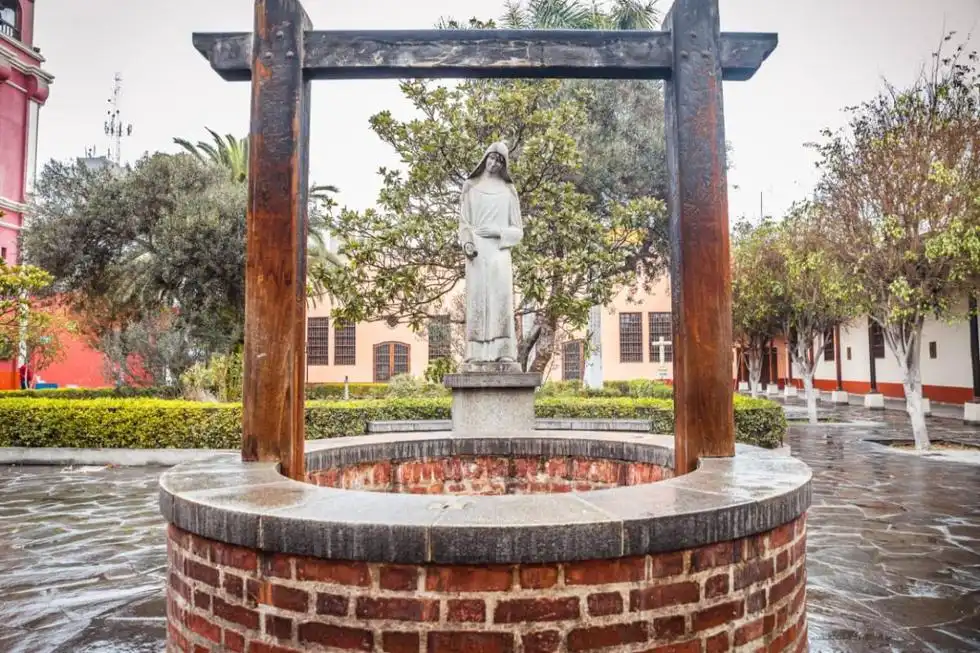
Experience the fest of Saint Rose of Lima
The Saint Rose of Lima Catholic Church stands as more than just a historic building – it functions as an active spiritual hub where centuries-old customs continue alongside contemporary worship. Letter-writing traditions, flower ceremonies, and fulfilled vows demonstrate Saint Rose’s ongoing influence in daily Peruvian religious practice. As st rose of lima patron saint of Peru and the Americas, she connects different communities while addressing common human struggles of pain, hope, and faith.
After learning about Lima’s heritage through the traditional Feast of Saint Rose of Lima, you can honor Peru’s patron saint by exploring her birthplace sanctuary, following her historical walking path, and joining the deep devotion that has connected Peruvians for four centuries. Experience the Saint Rose of Lima Catholic Church to see the active faith that moves millions today, join the historic practices of petition letters and rose presentations, and understand why this extraordinary woman continues as one of Latin America’s most cherished religious figures.